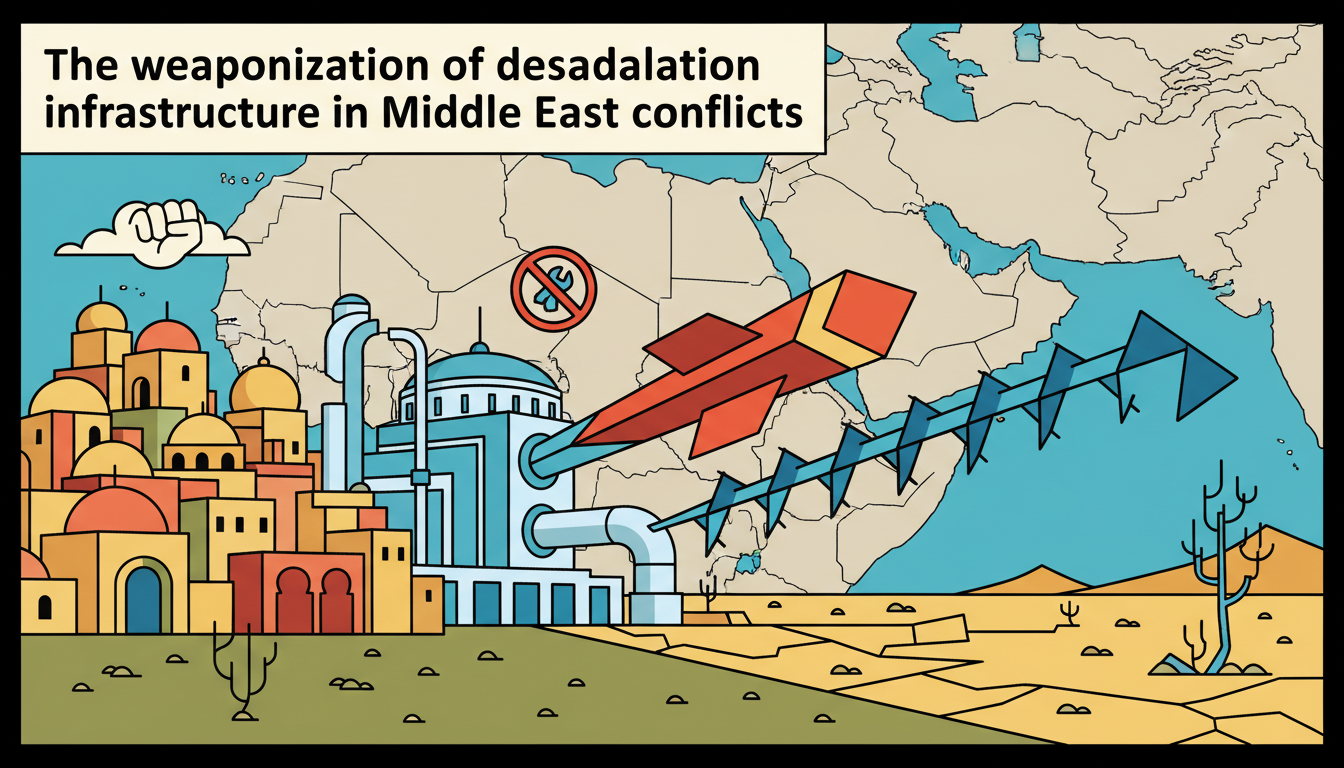
The strategic targeting and disruption of water infrastructure in the Middle East have emerged as significant factors in regional conflict, particularly regarding desalination facilities in Gaza. The destruction of these plants, alongside fuel shortages and power outages, has severely restricted access to potable water for millions of residents. This collapse of vital utility systems has forced the population to rely on contaminated or brackish water sources, triggering a growing public health crisis and long-term environmental degradation that complicates humanitarian relief efforts and regional stability.
- Desalination plants in Gaza, which previously served as primary sources of clean drinking water, have largely ceased operations due to structural damage and a lack of fuel.
- The disruption of water services has led to a significant increase in water-borne diseases and dehydration among the civilian population.
- Prior to the escalation of the conflict, Gaza’s water supply was managed through a combination of local desalination, groundwater extraction, and imports.
- International observers and environmental experts have identified the systematic targeting of water infrastructure as a form of ecological pressure with lasting consequences for the territory.
- The destruction of wastewater treatment facilities has resulted in the discharge of untreated sewage into the Mediterranean Sea, creating an environmental hazard for the entire coastline.
- Humanitarian organizations emphasize that the restoration of water and sanitation services is a critical priority to prevent a total collapse of public health.
France 24 is an international television network and news website owned by the French state.
Official website: https://www.france24.com/en/
Original video here.
This summary has been generated by AI.

Leave a Reply