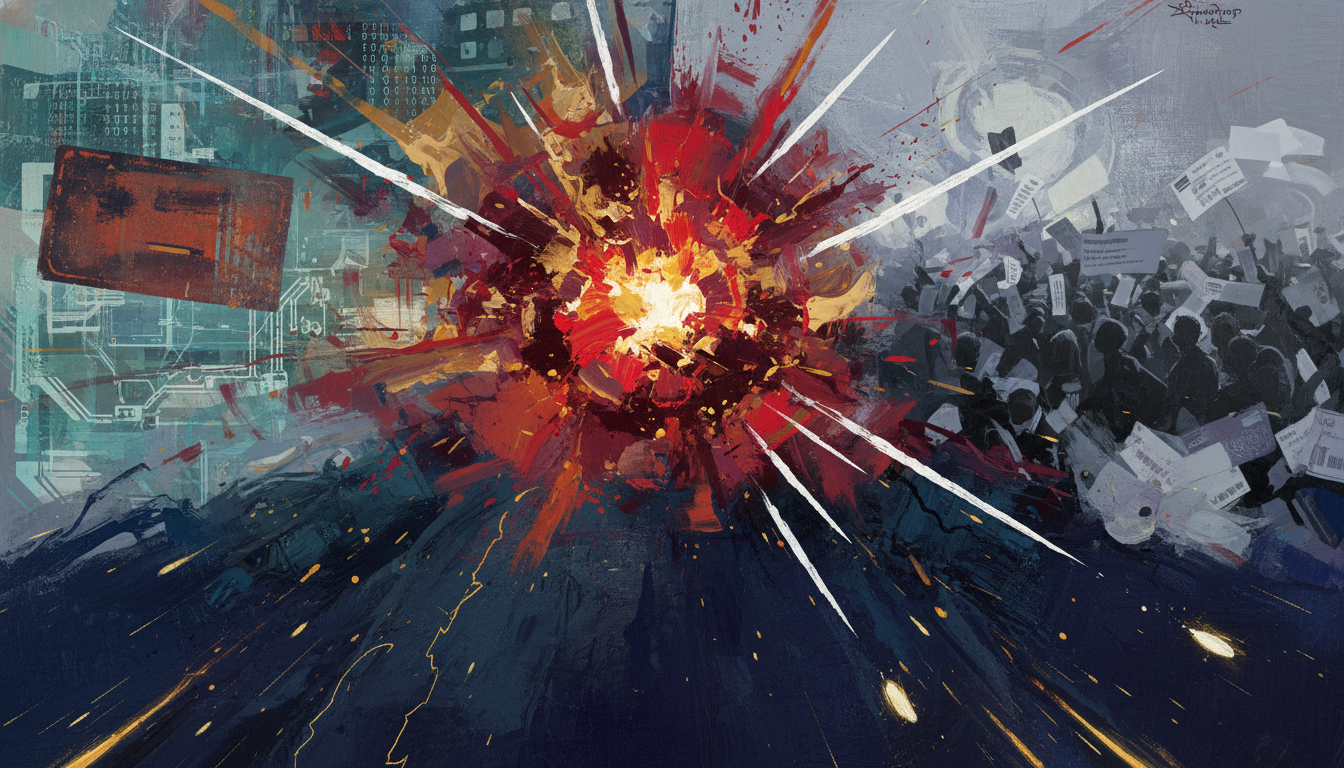
Between March 23 and March 29, 2026, the international community witnessed a historic transition in global geopolitics as long-standing proxy warfare in the Middle East erupted into direct sovereign conflict. Concurrently, major technological corporations faced unprecedented legal and regulatory crackdowns regarding algorithmic harm and the weaponization of artificial intelligence. Against a backdrop of severe national infrastructure failures in the Americas and Asia, European electorates mobilized in record numbers to navigate deeply polarized democratic landscapes.
Middle East Escalation: From Proxy War to Direct Sovereign Conflict
The geopolitical landscape of the Middle East underwent a historic transition early this week when Iran launched a massive, unprecedented aerial assault against Israel. Firing over 300 drones, cruise missiles, and ballistic missiles directly from Iranian soil, the attack marked a definitive end to the era of shadow warfare between the two nations. While Israeli air defenses, heavily supported by U.S. and allied forces, intercepted approximately 99% of the incoming projectiles, several breached the network to cause minor structural damage near the highly sensitive Dimona nuclear research facility and the Nevatim Airbase.
In response to the drastically heightened threat level, the United States deployed 3,500 additional paratroopers from the 82nd Airborne Division to the region. As the week progressed, Israel shifted its primary strategic focus toward its northern border, initiating heavy bombardments of southern Lebanon and Beirut’s Dahiyeh district. The military objective to push Hezbollah forces back and create a physical buffer zone has triggered a catastrophic humanitarian crisis, resulting in the displacement of over 1.2 million Lebanese civilians.
By the weekend, the theater of conflict expanded further. Yemen’s Houthi rebels launched a new hypersonic ballistic missile that successfully bypassed advanced defense systems, triggering air raid sirens across central Israel and Tel Aviv. The sprawling, multi-front war has devastated regional infrastructure, destroying an estimated 30% to 40% of Gulf energy facilities. This destruction severely disrupted global shipping through vital maritime chokepoints, sparking volatile spikes in global oil prices. Diplomatic channels remained chaotic throughout the crisis; former U.S. President Donald Trump oscillated between threatening to become Iran’s “worst nightmare” and extending vital sanctions deadlines in a calculated attempt to ease sudden, massive global stock market selloffs.
The Global Reckoning of Big Tech and AI Ethics
Major technology companies faced a watershed week of legal and regulatory accountability regarding the psychological and societal impacts of their digital ecosystems. Setting a profound precedent, Meta and Google were ordered to pay millions in a major social media addiction lawsuit. This was immediately followed by a landmark ruling from a UK coroner, who made legal history by determining that algorithms utilized by Meta and Pinterest “contributed more than minimally” to the suicide of 14-year-old Molly Russell by actively amplifying material romanticizing self-harm.
Following these definitive judicial findings, international regulators took swift action. The U.S. Surgeon General formally proposed implementing tobacco-style health warning labels for social media platforms. Concurrently, hundreds of U.S. school districts filed a massive joint lawsuit against TikTok, Meta, and YouTube, accusing the platforms of engineering addictive features that exploit adolescent vulnerabilities. Internationally, Indonesia passed a strict ban on social media usage for all children under the age of 16.
The rapid, unchecked advancement of Artificial Intelligence also prompted urgent legislative and ethical interventions. Lawmakers in Germany pushed to aggressively criminalize the non-consensual generation of deepfake pornography, targeting a deeply troubling trend where anonymous developers create synthetic avatars to hyper-sexualize and financially displace real Black female creators. On the military front, international watchdogs raised severe alarms over the growing use of predictive AI systems for automated battlefield target identification, warning that prioritizing operational speed over human verification fundamentally erodes combat accountability. Meanwhile, the European Union aggressively wielded the “Brussels Effect” to enforce its sweeping AI Act, forcing multinational tech corporations to adopt European digital safety rules worldwide.
Democratic Shifts and Polarized Elections in Europe
European democracies witnessed immense voter mobilization amidst deeply polarized political environments. France recorded its highest voter turnout since 1981 during a high-stakes snap legislative election. A highly mobilized electorate successfully pushed back against a surging national right-wing movement, decisively turning Paris into a progressive, left-wing stronghold despite coordinated misinformation campaigns that utilized deceptive digital ads and flyers to misrepresent the New Popular Front coalition.
In Denmark, the political landscape shifted following a general election that resulted in a razor-thin victory for the center-left “red bloc,” which secured exactly 90 seats. Recognizing the fragility of the mandate, Prime Minister Mette Frederiksen resigned her current post to initiate the formation of a broader, centrist coalition government capable of tackling pressing economic and healthcare reforms. Simultaneously, Italy engaged in a fierce national debate over a controversial constitutional referendum aimed at separating the career paths of judges and prosecutors, while the German coalition government scrambled to address the record-high polling popularity of the far-right Alternative for Germany (AfD) party.
Global Infrastructure Failures and Energy Crises
Systemic fragility was a persistent global theme this week, with severe infrastructural breakdowns crippling nations across multiple continents. Cuba suffered a total, prolonged collapse of its national electrical grid after the failure of the Antonio Guiteras power plant plunged millions into absolute darkness and forced the suspension of non-essential public services.
Extreme climate events further exposed grid vulnerabilities in Asia and Africa. The Philippines was forced to declare a national energy emergency, implementing rolling blackouts and school closures as record-breaking heatwaves drove electricity demand far beyond capacity. Similarly, Egypt instituted a strict nationwide 10 PM business curfew to stabilize its struggling power grid and reduce costly fuel imports.
In the United States, infrastructure safety came under intense scrutiny following a fatal aviation accident at New York’s LaGuardia Airport, where an airplane collided with a ground vehicle on the tarmac. A subsequent investigative report exposed a severe, systemic staffing crisis within the U.S. Air Traffic Control network. The investigation definitively linked mandatory six-day work weeks and chronic controller fatigue to a highly concerning rise in commercial runway “close calls.”
Russia-Ukraine War and Strategic Realignments
The devastating toll of cross-border aerial bombardments continued in Eastern Europe. Russia launched massive, coordinated multi-wave assaults utilizing over 100 missiles and explosive drones deliberately targeting Ukraine’s national power grid. The strikes caused widespread blackouts and water supply disruptions in major cities. Bombardments heavily impacted civilian centers and historical infrastructure, including strikes on a residential dormitory in Hlukhiv and the destruction of an 18th-century architectural monument situated within Lviv’s UNESCO-protected historic buffer zone.
The protracted conflict continues to trigger major Western alliance realignments. Anticipating a strategic pivot by the United States regardless of the upcoming presidential election outcome, former NATO Secretary-General Anders Fogh Rasmussen urged the immediate development of a “more European NATO.” Internally, the European Union fiercely debated utilizing Article 7 to suspend Hungary’s voting rights, accusing Prime Minister Viktor Orbán of acting as a “Trojan horse” for Russian interests by repeatedly blocking vital aid to Ukraine. In a notable defense partnership shift, Ukraine signed a strategic agreement to share its combat-tested drone technology with Saudi Arabia, allowing Kyiv to commercialize its innovations while localizing advanced aerial manufacturing in the Gulf.
U.S. Domestic Policy and Justice Updates
In the United States, lawmakers spent the week locked in intense, eleventh-hour negotiations to avert a partial government shutdown. House leadership ultimately pushed forward an eight-week stopgap funding bill specifically tailored to maintain Department of Homeland Security (DHS) border operations, providing crucial time for broader security policy negotiations.
On the foreign policy front, the U.S. formally signaled a massive pivot in Latin America, recognizing the failure of its long-standing “maximum pressure” regime-change strategy in Venezuela. Moving away from crippling economic isolation, diplomatic channels have now pivoted toward direct negotiations with the Nicolás Maduro administration.
Notable legal and criminal proceedings also dominated the news cycle. In Northern Ireland, a chilling murder trial concluded with a life sentence for the killer of Natalie McNally. The defendant had broadcast a pre-recorded video game livestream on YouTube to establish a digital alibi, which was systematically dismantled by advanced digital forensics. Finally, in domestic sports and entertainment news, professional golf legend Tiger Woods was formally charged with a DUI following a severe, high-speed single-vehicle crash.
Leave a Reply