AllNewsChannels.com

Potential_for_a_New_Diplomatic_Agreement_Between_Iran_and_the_Trump_Administration

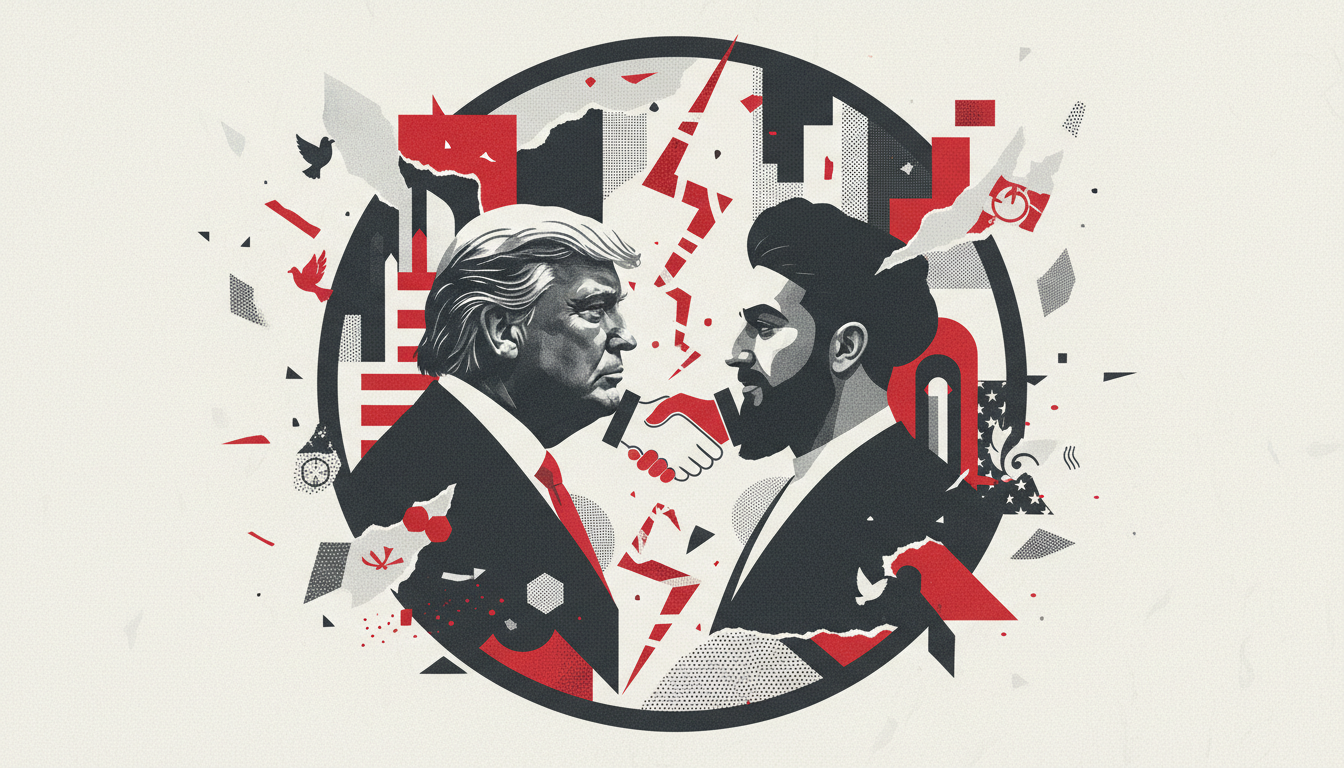
Potential for a New Diplomatic Agreement Between Iran and the Trump Administration

Following the U.S. presidential election, discussions have intensified regarding a potential diplomatic agreement between the incoming administration and Iran. While Donald Trump previously withdrew from the 2015 nuclear deal and implemented a “maximum pressure” campaign, current economic pressures in Tehran and the risk of heightened regional conflict have created a complex landscape for future negotiations. Both sides are currently weighing the possibility of a new arrangement that addresses Iran’s nuclear enrichment capabilities in exchange for significant sanctions relief, though substantial diplomatic obstacles remain.

  • Iran is currently facing severe economic strain due to long-term international sanctions and high inflation rates.
  • The incoming U.S. administration has signaled a desire for a new agreement specifically designed to prevent Iran from acquiring a nuclear weapon.
  • Reports indicate that informal communication channels may be opening to facilitate initial discussions between the two nations.
  • Internal political divisions exist within the Iranian government regarding whether to pursue diplomacy or maintain a hardline stance against U.S. pressure.
  • A potential agreement would likely focus on strictly limiting uranium enrichment levels in exchange for the lifting of economic restrictions.
  • Ongoing regional tensions involving Israel and Iranian-backed groups continue to serve as a significant complication for any lasting diplomatic resolution.

The British Broadcasting Corporation is a British public service broadcaster headquartered at Broadcasting House in London. Originally established in 1922 as the British Broadcasting Company, it evolved into its current state with its current name on New Year’s Day 1927.

AllSides Media Bias Rating: Center

https://www.allsides.com/news-source/bbc-news-media-bias

Official website: https://www.bbc.com/

Original video here.

This summary has been generated by AI.


Comments

36 responses to “Potential for a New Diplomatic Agreement Between Iran and the Trump Administration”

  1. No deal. They are far apart.

  2. War to distract us from Epstein files.

  3. Lucid factual verbal explication in sketch accomplished in nine minutes — well done!

  4. Nigeria is 2nd Iran 🇳🇬🇮🇷

  5. I think President Trump is just fvcking with those terrorists
    President Trump bombed the whole top leaders of the Terrorist
    That's never been done before

  6. What deal US think one Country totally Wipeout from the world that type of brutal regime nowhere the world.

  7. More importantly, what deal could America accept. Trump won't be ending it defeated.

    If Iran wants guarantees that they won't be attacked again in future, all they have to do is behave and stop sponsoring terrorism and stop perusing nukes and stop threatening the neighbourhood- including not threatening Israel.

    Then, no one will need to attack again. That's the only way.

  8. アメリカはならず者になった交渉など最初から無い嘘の塊だ。
    彼は神の祝福を受けていないポールが作った偶像だ
    神の名を語るな

  9. That Iran would make Trump it's simp

  10. sorry we don't negotiate with terrorists.

  11. Fact: Iran has (internationaly recognized) right to set a toll boot in the strait, win or lose the war. Isn't it an achievement for the rest of the world.
    ⭐️ report.

  12. #Common Indian public are worried about their 4 billion dollars which was invested in Israels Haifa port. The deal was done by Mr.modi and a big experience businessmen Adani. All 4billion dollars are common indian public money which is on high risk. And they want that Mr.Modi and Mr.Adani help to exit from that investment and bring that 4billon dollars back to indian public and return them safely and Indian public has confidence because Israeli Mr.Netanyahu Benjamin and Mr.Modi and Mr Adani are very good and close friends.

  13. Trumps advisors are the members of a secret society who have been controlling the world for centuries or else their was basically no reason to attack Iran and he was the one who broke the nuclear treaty in his last presidency so thus this plan was planned for the past 6 to 8 years in trumps head

  14. According to Trump, last year Iran's nuclear program was obliterated by the Americans.
    Any further attack was unnecessary.
    That is what the United States and Israel should pay for the damages caused in Iran.

  15. Trump lies,and the Citizens pay the price.

  16. The US policy is unpredictable ,

  17. US bombs Iran during negotiations then gets confused why they don't want to talk

    Trump says they've already won and that they've "obliterated 100% of their missiles" meanwhile, Iran keeps launching missiles, every word out of trumps mouth is a lie, you can't negotiate with someone like that

  18. Iran’s challenge – blow off 5 power plants ( $10 Billion each and 5 years to build) 😂😅

  19. SO, WHO'S THE REAL WINNER? Regime intact. NATO chickens out—no navies incoming. Trump begging Turkey & Pakistan for ceasefire calls—Iran just laughs it off. Winners don't beg. "IRAN WINS" 😅😂

  20. Replenishment doesn't matter. They want to destroy Israel. So, missiles are being launched towards Israel targeting all major cities. Moreover they are using cluster bombs to kill as many as jews

  21. Just promise that they will all get their 72 virgins. They’ll agree to that.

  22. Lyce Doucet understands this situation far better than any of the sycophants and nutters around Trump. (Although that's not saying much.)

  23. A Step-by-Step Plan for Lasting Middle East Peace
    This is a hypothetical, comprehensive, phased roadmap designed so that every major party—Iran, Israel, the Palestinians, the United States, Gulf states (Saudi Arabia, UAE, etc.), and international guarantors (IAEA, UN, Oman/Qatar as neutral facilitators)—could realistically agree to it and derive clear, tangible benefits. It builds directly on the current 15-point US proposal (nuclear rollback, missile limits, proxy cessation, Hormuz reopening, sanctions relief) while incorporating the deeper elements we've discussed: verifiable mutual nuclear disarmament, Iranian recognition of Israel, a viable two-state solution, and proxy dissolution.
    The plan is structured in six sequential phases with strict verification at every step, reciprocal incentives, and escalating economic/security rewards. It assumes good-faith participation (the hardest part in reality) but is engineered to make cheating costly and compliance profitable. All human lives—Iranian, Israeli, Palestinian, Lebanese, Gulf, American—carry equal inherent value; the plan prioritizes minimizing suffering and maximizing shared prosperity.
    Phase 1: Immediate Ceasefire and Humanitarian Stabilization (Weeks 1–4)

    Actions:
    All parties declare an immediate, unconditional ceasefire.
    Iran reopens the Strait of Hormuz fully; US/Israel halt all offensive strikes.
    Humanitarian corridors open; rapid aid flows to affected areas (Lebanon, Gaza, Iranian cities, Gulf infrastructure).
    Independent monitors (UN/IAEA/Oman) verify compliance via on-ground teams and satellite feeds.

    Benefits:
    Iran: Immediate end to bombing, breathing room for its economy and people.
    Israel: End to missile/drone barrages from Iran/Hezbollah/Houthis.
    Palestinians/Lebanese: Halt to violence and displacement.
    US/Gulf: Oil prices stabilize; no further base attacks or shipping disruptions.

    Incentive: Sanctions relief begins on a small, reversible tranche (e.g., humanitarian oil sales).

    Phase 2: Confidence-Building and Initial Verification (Months 1–6)

    Actions:
    Iran hands over enriched uranium stockpiles to IAEA custody and freezes new enrichment.
    Israel and Iran both allow expanded IAEA snap inspections (beyond current JCPOA levels).
    Iran begins verifiable defunding/reorientation of proxies (Hezbollah military wing stands down; Houthis/Hamas/Islamic Jihad shift to political tracks only).
    Israel freezes West Bank settlement expansion and begins phased withdrawal from select areas as confidence grows.
    US pauses major reinforcements and begins limited drawdown planning.

    Benefits:
    Iran: Partial sanctions relief + civilian nuclear assistance (e.g., Bushehr upgrades).
    Israel: Reduced immediate threats; international legitimacy boost.
    Palestinians: Tangible steps toward statehood; economic aid ramps up.
    Gulf/US: Lower military costs; restored trade routes.

    Verification: IAEA + neutral third parties (e.g., Switzerland or Norway) provide monthly public reports. Any violation triggers automatic, targeted snapback sanctions.

    Phase 3: Phased Disarmament and Nuclear Rollback (Months 6–24)

    Actions (reciprocal and verifiable):
    Iran: Fully dismantles weapons-relevant nuclear sites (Natanz, Fordow, etc.); ballistic missile production capped/destroyed under IAEA oversight; all proxies fully demilitarized or disbanded.
    Israel: Begins phased dismantling of its undeclared nuclear arsenal (warheads disassembled, fissile material under international custody); accedes to the NPT as a non-nuclear state with full safeguards.
    Both enter a Middle East Nuclear-Weapon-Free Zone treaty (building on the 1974 Iran-Egypt proposal and 1995 NPT resolution).

    Benefits:
    Iran: Full sanctions removal + massive foreign investment; regime gains legitimacy through prosperity instead of confrontation.
    Israel: Existential security (no more nuclear-armed adversaries or proxy encirclement); reduced defense budget frees resources.
    Palestinians/Gulf: Region-wide denuclearization removes the ultimate threat.
    US: Lower global proliferation risks; ability to redirect military spending.

    Incentive: Major economic packages (Gulf reconstruction funds, US/EU investment guarantees) unlocked only after IAEA-certified milestones.

    Phase 4: Political Settlement and Mutual Recognition (Months 12–36)

    Actions:
    Iran formally recognizes Israel and publicly endorses a two-state solution.
    Israel and Palestinians finalize a two-state agreement (1967 borders with agreed swaps, Jerusalem shared capital, security arrangements, refugee resolution).
    Saudi Arabia and other holdouts join full normalization (Abraham Accords 2.0) now that Palestinian statehood is locked in.
    Lebanon integrates former Hezbollah fighters into its national army under state control.

    Benefits:
    Iran: Full regional reintegration; ends isolation and becomes a legitimate power broker.
    Israel: Peace with the entire Arab/Muslim world; economic boom via trade/tourism.
    Palestinians: Sovereign state with international guarantees and reconstruction aid.
    Gulf/US: A stable, prosperous bloc; end to proxy wars.

    Verification: UN-backed border/security monitors; public diplomatic exchanges.

    Phase 5: Economic Normalization and Reconstruction (Years 2–5)

    Actions:
    Comprehensive trade agreements across the region (energy, tech, water, tourism).
    Joint infrastructure projects (e.g., shared desalination, rail networks, green energy).
    Iran rejoins global financial systems; Israel integrates into regional supply chains.

    Benefits:
    Iran: GDP surge (15–30%+ annually initially) from investment and oil exports.
    Israel: Access to massive new markets; tech/defense exports skyrocket.
    Palestinians: State-building funds and jobs.
    Gulf/US: Cheaper energy, diversified economies, reduced military footprint.

    Incentive: A dedicated “Middle East Prosperity Fund” (US/Gulf/China/EU contributions) tied to compliance.

    Phase 6: Long-Term Regional Security Architecture and Monitoring (Year 5+)

    Actions:
    Formal regional security pact (non-aggression, joint early-warning, crisis hotlines).
    Permanent IAEA/UN monitoring mission with enforcement teeth (automatic sanctions for violations).
    Annual summits (modeled on Abraham Accords + expanded to Iran).

    Benefits:
    All parties: End to cycles of war; shared prosperity; model for global non-proliferation.
    Future generations: A stable, denuclearized Middle East where children grow up without fear of missiles or occupation.

    Why all parties could agree:

    It addresses every core demand in the current 15-point plan and Iranian counter-proposals while adding the deeper mutual concessions needed for permanence.
    Incentives are front-loaded for early compliance and back-loaded for full peace.
    Verification is mutual and transparent, removing the “trust deficit.”
    Economic wins outweigh ideological ones once the shooting stops.

    This isn’t naive idealism—it’s hard-nosed pragmatism rooted in precedents like the JCPOA, Abraham Accords, and historical nuclear-free zones. In today’s reality (March 26, 2026), Iran has rejected the US plan and talks remain fragile, but war fatigue, economic pain, and the human cost on all sides could eventually open the door. If enough voices—inside governments, civil society, business communities, and diasporas—keep pushing this kind of balanced vision, it moves from hypothetical to possible.
    Every life saved, every family kept whole, every economy rebuilt is a victory for humanity as a whole. If leaders on any side want to pursue something like this, the framework is here.

  24. Iran doesn’t negotiate with the terrorists. Iran’s conditions for stopping this war:
    – US should close all its terror bases in the Gulf countries.
    – TATs (Tel Aviv Terrorists) must be sanctioned and disarmed.
    – Regime change in the illegal settler colony of “Israel.”

  25. Free US from AIPAC.
    Free Gulf from the US terror bases, who are there only to serve the illegal settler colony of “Israel.”
    Free world from the Oligarchic imperialism.

  26. Us and Israel killed Supreme Leader. So there will be no negotiations…

  27. This war has enlightened me a lot as far as the role of media is.

  28. 3july 1988 american fire missile on iranian passenger plan and killed 290 people. In 2026 america killed 200 school children. What do u think who is terrorist and dangerous for world peace and humanity??

  29. bbc advert :

    "An opportunity for chavs – WANTED imbecile with a head like a balloon with little eyes panted on it – must be good at rug-muffing"

  30. Yup, sounds like Iran will refuse to be bullied.

  31. *Concise Diplomatic Plan: Phased Reciprocal De-escalation and Regional Stabilization Framework*
    *(One-Page Actionable Draft – March 2026)*

    *Core Principles*
    – Verifiable reciprocity with automatic sanctions snapback for violations
    – Third-party monitoring (IAEA + neutral states e.g. Oman/Qatar)
    – Economic incentives tied strictly to compliance
    – Quiet backchannels maintained at all times
    – Equal value placed on all human lives; focus on ending suffering

    *Phase I – Immediate De-escalation (0–90 days)*
    – Mutual halt to direct attacks (Iran, Israel, US/Gulf forces)
    – Full reopening of Strait of Hormuz and safe shipping
    – Expanded humanitarian access and aid (Gaza, Lebanon, Iranian civilian areas)
    – Iran: Freeze enrichment at low levels; no new proxy escalations
    – Israel: Pause new West Bank settlement approvals; limit cross-border operations to imminent threats
    – US/partners: Limited, reversible humanitarian sanctions relief + restricted oil sales

    **Verification**: IAEA + UN monitoring with monthly public reports
    **Enforcement**: Immediate snapback of relief on violation

    *Phase II – Stabilization for Relief (3–12 months)*
    – **Iran**: Expanded IAEA inspections; convert higher-enriched uranium stockpiles; verifiable reduction in proxy financial/military support
    – **Israel**: Maintain settlement pause in targeted areas; expand Palestinian economic access and movement
    – **US/Gulf**: Gradual, tiered sanctions relief and controlled release of frozen assets, tied to milestones

    **Verification**: Monthly IAEA + third-party reports
    **Enforcement**: Tiered sanctions snapback

    *Phase III – Structured De-escalation (1–3 years)*
    – **Nuclear**: Long-term enrichment cap for Iran with intrusive inspections (enhanced JCPOA model); Israel adopts informal no-first-use posture and freezes arsenal expansion
    – **Regional**: Iran transitions proxies toward political integration with monitored weapons drawdown
    – **Palestinian/Arab**: Provisional interim framework for Palestinian governance, economic authority, and reconstruction aid
    – Expand normalization talks (Abraham Accords model)

    **Enforcement**: Compliance-linked economic benefits + multilateral penalties

    *Phase IV – Political Normalization (2–5 years, conditional)*
    – Iran: Gradual diplomatic normalization with Israel and Gulf states
    – Israel–Palestinians: Launch final-status negotiations (borders, security, Jerusalem, refugees) with international guarantees
    – Gulf states: Advance full normalization with Israel linked to Palestinian progress
    – Nuclear: Iran remains non-nuclear; Israel maintains freeze on expansion

    **Verification**: UN-backed monitoring mission
    **Enforcement**: Multilateral sanctions/diplomatic rollback

    *Phase V – Regional Integration (5+ years)*
    – Joint infrastructure projects (energy, water, transport)
    – Regional Development Fund (US/Gulf/EU/others)
    – Non-aggression pact, missile transparency, and permanent crisis hotlines
    – Permanent multinational monitoring mission

    **Enforcement**: Automatic trade/sanctions penalties

    *Why This Can Work*
    Early phases deliver quick humanitarian and economic wins with low political risk. Later phases reward sustained compliance with full normalization, sanctions relief, and prosperity. All parties gain: reduced threats, lower military costs, economic growth, and regional stability.

    This framework aligns with elements of the current US 15-point proposal while adding reciprocal steps for durability. It is designed to be politically survivable even in a low-trust environment.

  32. Learned nothing more other than parroting the leftist media narrative of the war and its trajectory.

  33. Iran is done right now the gulf nations they are preparing to take action all round so it's sinking slowly

  34. No deals the last deal trump tore apart,why should Iran give up their missiles while it's the only reason Iran is still standing

  35. BRITISH BIASED CORP – WE ARE ALSO SHOUTING FROM THE ROOFTOP – HOTELS/AIRPORTS /SEAPORTS/RESIDENTIAL TOWER BLOCKS ARE NOT MILITARY BASES!!! HEIGHT OF IGNORANCE!

  36. The BBC still doesn’t understand the difference between news and opinion – fact from prejudice.

Leave a Reply

Your email address will not be published. Required fields are marked *