BODY:
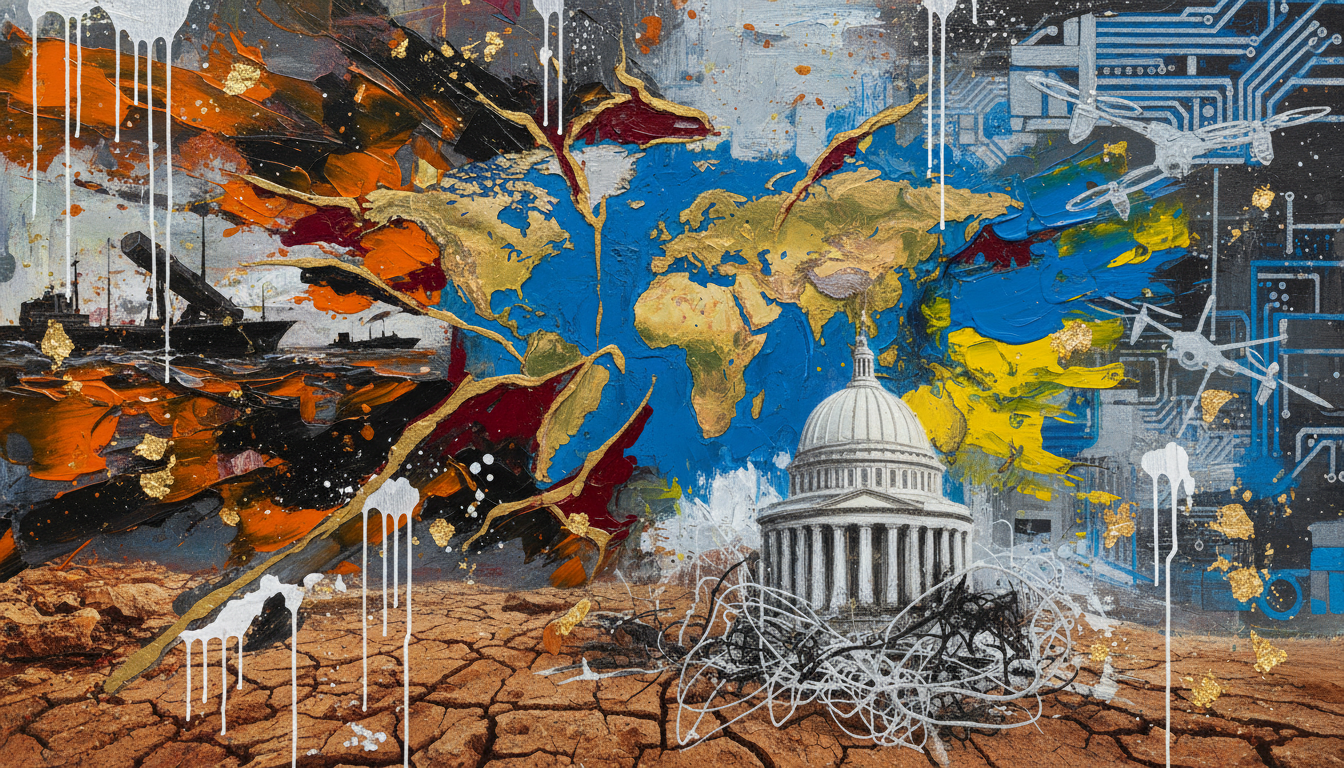
A convergence of international crises continues to drive massive geopolitical and economic shifts today, from the deployment of additional U.S. military personnel to Israel in preparation for further Iranian escalation, to shifting tactics on the frontlines of the ongoing Russia-Ukraine war. Concurrently, global energy markets are experiencing high volatility due to the continued closure of the Strait of Hormuz and intensifying Houthi attacks, while domestic U.S. politics face waves of protests over presidential immunity and sweeping legislative proposals targeting congressional stock trading.
Middle East Escalation and U.S.–Iran Tensions
The already escalated security situation in the Middle East has reached another critical juncture following the United States’ authorization to deploy an advanced Terminal High Altitude Area Defense (THAAD) system and approximately 100 military personnel to Israel. As reported by the BBC, this marks a significant expansion in American involvement, placing more troops on the ground to further bolster Israeli defenses against ongoing Iranian ballistic missile strikes. This localized deployment is mirrored by a massive maritime buildup, with over 3,000 U.S. Marines and sailors arriving in the Red Sea aboard the USS Bataan and USS Carter Hall. While U.S. Central Command insists the deployment is a defensive measure to secure the Strait of Hormuz from Iranian interference, the BBC notes it has sparked political accusations regarding a secret plan for a ground-based military invasion. In response to the escalating U.S. presence, Iranian officials have issued severe warnings, threatening large-scale aerial attacks using missiles and drones against American forces in the region, according to the BBC.
The volatile atmosphere is being heavily influenced by former U.S. President Donald Trump, who has publicly suggested that Israel should target Iran’s primary oil export hub, Kharg Island. Trump positioned this extreme economic pressure as a necessary consequence if Tehran fails to reach a diplomatic agreement to end hostilities, as detailed by Channel News Asia and DW. Concurrently, Trump asserted that Iran’s current economic situation has made them eager to negotiate a rapid settlement, a claim covered by Bloomberg. Iranian leaders, however, have entirely dismissed Trump’s rhetoric. According to France 24, Tehran views the statements as unserious, citing their resilience during his previous “maximum pressure” administration and asserting that their regional policies operate independently of U.S. political figures. Former British Ambassador Sir Peter Westmacott also challenged Trump’s strategy, warning on France 24 that the absence of a multilateral diplomatic framework threatens immense global economic damage and prolonged volatility.
Domestically and across its borders, Israel continues aggressive legislative and military maneuvers. The Israeli Knesset has officially passed a highly controversial law allowing for the deportation of family members of “terrorist” attackers to the Gaza Strip if they had prior knowledge of or expressed support for the attack. DW reports that human rights organizations condemn the legislation as illegal collective punishment. On the northern front, the Israeli military has continued to intensify its ground operations against Hezbollah. Tragically, an early morning Israeli airstrike in Hasbaya, southern Lebanon, struck a known media guesthouse, killing three journalists—camera operators Wissam Qassim and Ghassan Najjar, and broadcast technician Mohammed Reda. France 24 reports that Lebanese officials are labeling the strike a premeditated war crime intended to intimidate the press.
Religious tensions and pleas for peace remain central to the crisis. Israeli police enacted heavy security measures in Jerusalem’s Old City, actively preventing a senior Catholic leader and numerous Palestinian Christians from attending Palm Sunday Mass at the Church of the Holy Sepulchre, a restriction documented by France 24. Meanwhile, from the Vatican, Pope Francis issued a blunt warning to leaders considering a direct war with Iran. Covered by DW, the Pontiff declared that leaders who pursue war instead of diplomacy will not find divine favor, stressing that military aggression is always a defeat for humanity.
The Russia-Ukraine War and Geopolitical Ripple Effects
The ongoing explosive situation in the Middle East is inadvertently reshaping the strategic landscape of the war in Ukraine. According to the BBC, the diversion of Western military resources and diplomatic attention to Israel is providing Moscow with a critical reprieve and easing international scrutiny. However, this same regional tension might also hinder Russia; DW reports that Iran may be forced to pause its supply of loitering munitions to Russia as Tehran prioritizes its own domestic defense readiness, potentially offering Ukrainian forces a tactical advantage.
Amid these shifting dynamics and recent devastating multi-wave assaults on national power grids, Ukrainian President Volodymyr Zelensky has proposed a mutual cessation of strikes on energy infrastructure. The BBC notes that Zelensky views halting attacks on power grids and merchant shipping as a crucial first step to de-escalating the war’s most active phase, though he maintains that Ukraine’s territorial goals remain non-negotiable.
On the battlefield, the character of the war continues to evolve rapidly through drone technology. 60 Minutes details how inexpensive, first-person view (FPV) drones have fundamentally altered combat doctrine by routinely neutralizing multi-million-dollar heavy armor. The U.S. military is heavily studying these Ukrainian tactics, as well as the constant electronic warfare cycles of jamming and counter-jamming, to redesign its own troop protection strategies. Further expanding its defensive posture, NATO has launched Operation “Nordic Response” in the Arctic. Channel News Asia reports that over 20,000 troops from 13 nations are drilling in extreme weather to defend newly expanded NATO territory, an exercise occurring amid ongoing U.S. pressure for European allies to meet their 2% GDP defense spending targets.
Global Economy, Energy Markets, and Cuba Relations
Global energy markets continue to buckle under the weight of maritime instability. The continued closure of the Strait of Hormuz has halted the transit of approximately 20% of the world’s petroleum liquids. Bloomberg reports this supply shock has forced tankers to reroute around the Cape of Good Hope, sending global crude prices surging. The situation is being aggressively compounded by the ongoing Iran-Houthi conflict, which Bloomberg notes has introduced a severe geopolitical risk premium to oil benchmarks.
This macro-level instability is driving heavy volatility in financial markets. According to Bloomberg, there is a massive spike in open interest for put options as traders hedge against downward equity movements. Analysts warn that recent equity rallies are expected to be short-lived, with Bloomberg reporting that stretched valuations and persistent high interest rates are forcing institutional investors to rotate into defensive positioning ahead of crucial economic data releases.
In the Caribbean, an ongoing deep energy crisis has prompted a historic pivot in U.S. foreign policy. France 24 reports that the United States is reversing specific restrictions on its long-standing Cuba oil blockade. This humanitarian relief measure aims to restore and prevent further failure of Cuba’s electrical grid, following its recent total, prolonged collapse that resulted in nationwide blackouts. Simultaneously, Moscow is continuing its strategic support of Havana; France 24 notes that a Russian oil tanker recently docked in Cuba, delivering critical crude supplies during the island’s dire shortages.
United States Domestic Politics and Society
Inside the United States, citizens are fiercely protesting recent judicial rulings expanding executive power. The BBC reports that nationwide “No Kings” protests were held in major cities, including Washington D.C., targeting the Supreme Court’s ruling on presidential immunity and its implications for pending legal cases involving Donald Trump. The demonstrators firmly advocate that no government official, including the president, should exist above the law.
On Capitol Hill, a bipartisan coalition led by Senator Todd Young and Representative Elissa Slotkin has introduced sweeping legislation to ban members of Congress, their spouses, and dependents from trading individual stocks. Bloomberg details that the bill requires lawmakers to utilize blind trusts to eliminate insider trading and restore deeply eroded public trust. At the state level, Florida Representative Tom Keen is advocating for a localized political strategy, telling Bloomberg that politicians must abandon polarizing ideological wars and focus exclusively on “kitchen-table” crises, such as skyrocketing property insurance and housing affordability.
Calls for a shift in national culture are also coming from prominent cultural figures. Retired Duke University basketball coach Mike Krzyzewski, in a feature by 60 Minutes, has advocated for a transition from an individualistic “me” culture to a collective “we” mentality to heal American civil discourse. While national unity remains a theoretical debate, concrete infrastructure issues are threatening lives. Further exposing the ongoing, systemic network crisis of severe FAA staffing shortages and chronic controller fatigue, newly obtained documents featured on 60 Minutes reveal that these issues resulted in multiple near-miss midair collisions at Reagan National Airport in the 24 hours directly preceding another highly publicized aviation incident in Washington, D.C.
Global Humanitarian Crises and Migration
Far from the geopolitical spotlight, devastating environmental disasters continue to unfold. Northern Kenya is suffering its worst drought in 40 years, with 4.4 million people facing severe food insecurity following the mass death of livestock. DW reports that international humanitarian aid for the region has been heavily slashed, with global funds redirected toward high-profile conflicts like the war in Ukraine, resulting in a surge of severe acute malnutrition among Kenyan children.
Meanwhile, migration policies are facing strict overhauls in Europe. DW reports that Germany is vigorously debating the deportation of Syrian refugees with criminal records back to Syria. Following violent domestic incidents, German courts have ruled that Syria is no longer under a generalized state of war, prompting intense political pressure to reconsider the subsidiary protection status for portions of the 970,000 Syrians currently residing in the country.
Science, Technology, Medicine, and Culture
In the technological sphere, China’s aggressive expansion into electric vehicle (EV) manufacturing has created a drastic domestic labor shortage. Channel News Asia reports that the nation lacks enough specialized technicians capable of repairing complex high-voltage systems and diagnosing software issues, forcing educational institutions to rapidly launch new training programs to support both domestic grids and international EV exports. In the medical sector, Singapore celebrated a monumental milestone. According to Channel News Asia, 35 kidney and liver transplant patients at the National University Centre for Organ Transplantation (NUCOT) were honored for surpassing 25 years of post-surgery survival, highlighting decades of advancement in immunosuppressant therapies.
Economic innovations are taking a digital turn in South Asia. Channel News Asia profiles how Pakistani youth are aggressively pursuing careers in e-sports and online streaming to circumvent rampant domestic inflation and high unemployment, utilizing international tournaments to earn stable foreign currency.
Cultural preservation and natural wonders also took center stage in broadcasting today. 60 Minutes featured a stunning exploration of Vietnam’s Son Doong, the world’s largest cave passage by volume, located in Phong Nha-Ke Bang National Park, which houses its own localized weather systems and subterranean jungles (further detailed in a companion broadcast). Another 60 Minutes multi-segment report contrasted the ancient rituals of the Yeoman Warders at the Tower of London and drone-assisted archaeological efforts on the crumbling “wild” sections of the Great Wall of China with the U.S. Navy’s modern Task Force 59, which is currently deploying autonomous AI-driven surface vessels to patrol the Middle East. Additionally, a 60 Minutes rerun explored the chilling details and psychological evaluations of the 1989 Brisbane “vampire killing,” focusing on the confession of Tracey Wigginton.
International Incidents and Sports
Military posturing continues in East Asia, where North Korean leader Kim Jong Un recently supervised tactical drills at a major special operations training base. Channel News Asia notes that the infiltration and reconnaissance exercises are a direct flex of military readiness in response to joint exercises held by the United States and South Korea.
Finally, in international sports, the French women’s national football team is proving dominant. France 24 reports that the squad successfully defeated Colombia, securing a critical victory just three days after conquering Brazil, establishing vital momentum and tactical superiority ahead of major upcoming tournaments.
This summary has been generated by AI. Please click the links to go to the original articles.
Leave a Reply