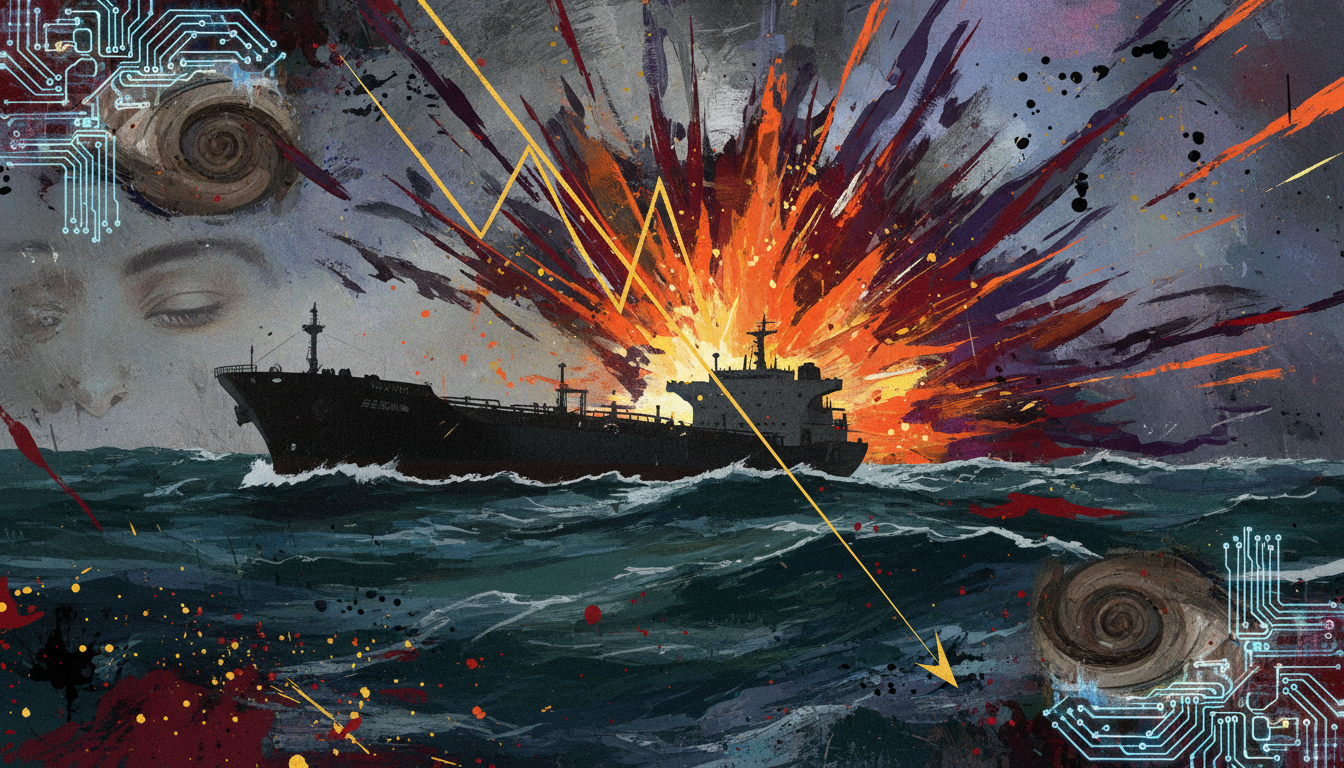
The global landscape continues to be defined by rapidly escalating military conflicts, widespread economic recalibrations, and landmark legal shifts. From ongoing high-stakes diplomatic and military maneuvering in the Middle East to deep disruptions in the global energy supply chain, international stability remains under severe pressure. Alongside these continuing geopolitical hotspots, shifting trade alliances, a tightening digital regulatory environment for major tech corporations, and crucial regional developments highlight a complex web of interconnected events shaping the current news cycle.
Middle East Conflicts and Regional Escalation
The Middle East remains in a highly volatile phase of strategic engagement, continuing to move away from proxy warfare and into a period of direct, overt military conflict between sovereign states. A CNA analysis indicates that this “new normal” severely increases the risk of broader regional instability, prompting a reassessment of traditional deterrence strategies. This shift continues to be starkly illustrated following Iran’s recent massive ballistic missile attack against Israel, which saw nearly 200 projectiles fired in retaliation for the assassinations of high-ranking Hezbollah and Hamas leaders. According to DW News, while Israel’s multi-layered air defense systems—bolstered by U.S. naval destroyers—intercepted a large portion of the barrage, the ongoing escalation has led Israeli officials, including Prime Minister Benjamin Netanyahu, to vow a heavy retaliatory strike.
Simultaneously, the theater of conflict continues to expand on the ground. Ongoing military operations suggest Israel is actively continuing its attempt to establish a physical buffer zone in Southern Lebanon. The objective remains to push Hezbollah forces away from the northern frontier to allow displaced Israeli citizens to return home. However, analysts warn via France 24 that a protracted physical presence in Lebanese territory could frame the Israeli military as an occupying force, potentially galvanizing armed resistance. The compounding civilian toll of these multi-front military strikes remains devastating. BBC reports that targeted aerial strikes on Iranian missile production sites, sustained bombardments in northern Gaza resulting in high civilian casualties, and the ongoing displacement of Lebanese citizens underscore a rapidly deteriorating humanitarian situation across the region.
US-Iran Diplomacy, Sanctions, and Internal Affairs
Despite the overt hostilities, a complex web of diplomatic maneuvering continues behind the scenes. During the United Nations General Assembly, Iranian President Masoud Pezeshkian signaled an openness to re-engage in negotiations with the United States to seek relief from international sanctions, a development closely monitored by the BBC. Complicating these fragile diplomatic channels, former U.S. President Donald Trump has intervened by granting Iran an additional 10-day extension regarding a critical sanctions decision, a move that DW News notes has introduced a brief window of uncertainty for international observers. Trump also extended a deadline for Iran to reopen the Strait of Hormuz—a vital maritime chokepoint for global oil shipments—in a continued attempt to mitigate ongoing global stock market declines, according to the BBC.
Behind Iran’s geopolitical posturing, a sophisticated “shadow economy” continues to operate. DW News details how the Islamic Revolutionary Guard Corps (IRGC) utilizes a “ghost fleet” of tankers to bypass Western sanctions and export crude oil primarily to China. This economic resilience funds Iran’s domestic defense industry and regional proxies, yet everyday Iranians continue to face high inflation and currency devaluation. Domestically, there is a visible and growing weariness among the Iranian public. A BBC report highlights that ordinary citizens remain deeply concerned about the possibility of a full-scale war and the resultant economic hardship, revealing a significant gap between the state’s militaristic rhetoric and the population’s desire for stability. Adding to global anxieties is Iran’s rapidly advancing nuclear program. With uranium enrichment levels reportedly reaching 60% purity—dangerously close to the 90% weapons-grade threshold—DW News reports that the collapse of international oversight has experts repeating warnings of a potential nuclear arms race in the Middle East.
Global Economic Impact and Financial Markets
The ongoing geopolitical friction in the Middle East continues to send shockwaves through global financial markets. Equities across the Asia-Pacific region experienced an extended selloff, driven by investors continuously rotating capital toward safe-haven assets amid the protracted Iran conflict, according to Bloomberg. This instability is heavily impacting credit markets, with Bloomberg noting that analysts are closely monitoring widening spreads, increased risk premiums for corporate debt, and long-term disruptions to credit availability through 2025.
Market participants are also continually grappling with extreme “weekend gap risk,” where off-hours news regarding Middle East escalations creates intense price volatility for Monday morning openings, forcing traders to adjust defensive strategies, as highlighted by Bloomberg. However, a brief market stabilization occurred during the European session following Trump’s decision to extend Iran’s compliance deadline, which temporarily eased the aggressive stock selloff (Bloomberg).
Looking at the broader economic picture, Morgan Stanley’s Jim Caron warned Bloomberg that financial markets may be “tiptoeing” toward a significant valuation shock. He cautioned that highly optimistic equity valuations leave little room for error if inflation persists or corporate earnings weaken. Conversely, JPMorgan Asset Management’s Bob Michele offered a slightly more optimistic outlook to Bloomberg, forecasting an economic slowdown without a full-scale recession. Michele pointed to resilient labor markets and strong household balance sheets as stabilizing factors, even if global oil prices reach $100 per barrel.
International Trade, Defense, and Geopolitics
Beyond the Middle East, major global powers are continuing to realign their trade and defense strategies. China remains actively engaged in preparing a long-game economic strategy to counter potential protectionist trade policies under a second Donald Trump term. According to Bloomberg, Beijing is accelerating technological self-reliance, bolstering internal manufacturing, and diversifying its trade partnerships toward the Global South and Europe. In a related pushback against proposed U.S. tariffs, Spanish Prime Minister Pedro Sánchez advocated for a diplomatic approach to international commerce, warning via The Wall Street Journal that unilateral protectionism could disrupt global markets and drive up consumer inflation.
In the realm of maritime defense, DW News reports that China is continuing to increasingly utilize its commercial fishing fleets as a “maritime militia” in the South China Sea. These civilian vessels, operated by military-trained personnel, engage in gray-zone tactics to swarm disputed reefs and project power without sparking formal naval warfare. In the Middle East, defense partnerships saw a new shift as Ukraine and Saudi Arabia signed a strategic agreement to share drone expertise. The BBC notes that this deal will allow Ukraine to commercialize its combat-tested UAV technology while helping Saudi Arabia localize its advanced aerial manufacturing.
Meanwhile, United Nations High Commissioner for Human Rights Volker Türk issued a stark warning regarding a dangerous growing global phenomenon. Speaking in Geneva, Türk highlighted to France 24 that world leaders are increasingly disregarding international law and humanitarian norms in their public rhetoric, threatening the post-World War II international order and increasing civilian suffering in conflict zones.
Domestic Politics, Regional Crises, and Human Rights
In the United States, the ongoing Middle East conflict continues to heavily influence the 2024 presidential campaign. DW News reports that while Donald Trump and the Republican Party are framing the instability as a failure of the Biden administration, the GOP remains internally divided between traditional interventionist hawks and “America First” isolationists. Domestically, the U.S. Senate is locked in intense negotiations. Bloomberg covered a critical vote that was held open for hours as lawmakers struggled to finalize a bipartisan spending package regarding Department of Homeland Security funding and border security policy to avert a government shutdown.
In Europe, the German coalition government continues to scramble to address the surging popularity of the far-right Alternative for Germany (AfD) party. Driven by economic stagnation and high energy costs, the AfD has reached record highs in national polling, prompting ongoing debates over potential political reforms and even the legality of a formal party ban, according to DW News.
Regional crises continue to mount in the Middle East and North Africa. In response to a severe energy crisis exacerbated by record summer temperatures, Egypt has implemented a strict nationwide 10 PM business curfew to stabilize its power grid and reduce costly fuel imports, as reported by France 24. In the Gulf, diplomatic tensions flared as the Gulf Cooperation Council formally condemned Iran’s recent missile strikes. Simultaneously, CNA reports that Tehran is advancing a controversial legislative bill to impose transit tolls—dubbed a “security tax”—on commercial vessels passing through the vital Strait of Hormuz.
On the human rights front, the Yazidi community is observing the tenth anniversary of the ISIL genocide in Sinjar, Iraq. Survivors and advocates told France 24 that with 2,600 Yazidis still missing and thousands living in precarious displacement camps, the international community must move beyond symbolic recognition and actively pursue legal accountability and formal reparations.
Aviation and Travel Infrastructure
Ongoing global instability continues to drastically reshape the aviation and travel sectors. Following the recent airspace closures over Israel, Jordan, Iraq, and Lebanon due to Iranian missile strikes, major carriers like Lufthansa and Emirates have been forced to continually cancel flights and extensively reroute services. CNA reports that these detours around active conflict zones are significantly increasing fuel consumption, operational costs, and travel times between Europe and Asia. This geopolitical shift was also evident at the NATAS travel fair in Singapore, where CNA noted a sharp decline in consumer interest for Middle Eastern destinations like Egypt and Jordan, prompting tour agencies to aggressively pivot their marketing toward safer regions in Central Europe, China, and Japan.
In the U.S., systemic infrastructural issues are threatening aviation safety. An investigative report by 60 Minutes revealed a severe staffing crisis within the national air traffic control system. With facilities operating at heavily reduced personnel capacities, controllers are facing chronic fatigue from mandatory six-day work weeks, directly correlating to a concerning rise in runway “close call” incidents involving commercial aircraft.
Tech, Social Media, and Youth Mental Health
The technology sector continues to face a profound reckoning regarding user safety and digital accountability. Adding to recent landmark legal rulings holding tech giants liable for child addiction, a UK coroner determined that social media content “contributed more than minimally” to the death of 14-year-old Molly Russell. According to the BBC, the inquest highlighted that algorithms used by Meta (Instagram) and Pinterest actively amplified material that romanticized self-harm, marking the first time social media consumption has been legally linked to a fatality. Taking immediate regulatory action in a similar vein, Indonesia announced a strict ban on social media usage for children under the age of 16. CNA reports that platforms failing to implement robust age verification mechanisms will face substantial government fines.
Addressing the psychological aspects of digital consumption, Associate Professor Jiow Hee Jhee shared insights with CNA regarding the impact of gaming on youth. He emphasized that problematic gaming is frequently a coping mechanism for underlying issues like academic stress or social isolation, urging parents to engage actively with their children’s digital habits rather than solely enforcing screen time limits. On the frontier of gaming technology, Nvidia is pushing the boundaries of artificial intelligence. The BBC showcased Nvidia’s Avatar Cloud Engine (ACE), which integrates generative AI to allow non-player characters (NPCs) to engage in unscripted, real-time voice conversations with players, though the innovation raises industry concerns over the job security of voice actors and writers.
Sports, Society, Media, and Entertainment
In international sports, World Athletics has officially barred transgender women who have gone through male puberty from competing in female world ranking track and field events. France 24 reports the organization prioritized the integrity and fairness of the female category, while also introducing stricter testosterone reduction requirements for athletes with differences in sex development (DSD). Adding a political angle to sports regulations, Donald Trump recently claimed personal credit for ensuring a ban on transgender athletes at the upcoming 2028 Los Angeles Olympic Games, a statement covered by France 24 that highlights the ongoing debate over gender eligibility in athletics.
In culture and media, the newly renovated Bukit Batok Public Library in Singapore has reopened with a “Library in the Park” theme. CNA highlighted the facility’s immersive ambient soundscapes, interactive digital discovery walls, and specialized “Calm Pods” for focused reading. Looking back at Cold War history, 60 Minutes revisited the high-stakes world of espionage with former CIA Chief of Disguise Jonna Mendez, exploring the advanced lifelike masks and “Moscow Rules” used to evade KGB surveillance. In the music scene, British pianist and television host Jools Holland reflected on his storied career with France 24, recounting collaborations with The Beatles and his efforts to popularize the boogie-woogie piano style. Additionally, a profile piece by 60 Minutes examined the dire environmental challenges currently facing the Great Barrier Reef, highlighting the widespread coral bleaching caused by rising ocean temperatures that threatens the planet’s largest living ecosystem.
Multilingual Comprehensive Daily Summaries
To ensure global accessibility, comprehensive digests covering today’s major geopolitical, economic, technological, and societal events have been syndicated across multiple languages. Readers worldwide can access these detailed summaries in:
- Turkish: Tırmanan ABD-İran Çekişmesi…
- Vietnamese: Căng thẳng toàn cầu tiếp diễn…
- Italian: Permangono tensioni globali…
- Korean: 미-이란 대치 고조…
- Indonesian: Ketegangan global berlanjut…
- Russian: Глобальная напряженность сохраняется…
- Portuguese: Tensões globais persistem…
- Arabic: استمرار التوترات العالمية…
- Hindi: अमेरिका-ईरान के बढ़ते गतिरोध…
- Danish: Globale spændinger fortsætter…
- German: Globale Spannungen halten an…
- French: Les tensions mondiales persistent…
- Japanese: 米イラン対立の激化…
- Mandarin: 美伊对峙升级…
- Spanish: Persisten las tensiones globales…
This summary has been generated by AI. Please click the links to go to the original articles.
Leave a Reply